


Six Essays On Military Affairs
Publisher: Foreign Languages Press
Format: Paperback
ISBN: none
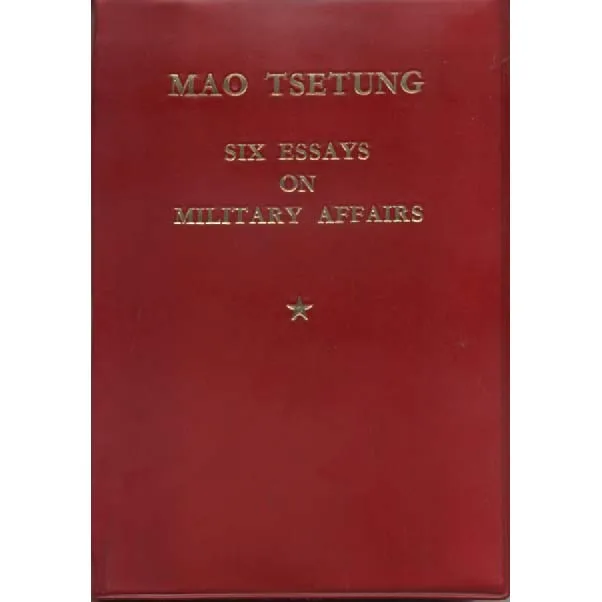
Six Essays on Military Affairs (1971) by Mao Tsetung, published by Foreign Languages Press, is one of those books that arrives already dressed for the part: compact, stern, and wrapped in that unmistakable red plastic slipcover that whispers, “I have been issued,” not “I have been chosen.”
It’s a slim volume of military writings from a man who treated strategy as both a practical craft and a kind of ideological weather system. Inside you’ll find the hard-edged logic of revolutionary war: discipline, morale, organisation, the relationship between army and people, the importance of conditions on the ground, and the repeated insistence that history can be steered if you understand the forces pushing it. It’s doctrine as prose. Instruction as persuasion. A handbook that never forgets it’s also a message.
And there’s an irony to owning it now, in 2026, via Crappy Old Books: what was once mass-produced as a tool of international political export has aged into a collectible artefact of the 20th century’s most intense certainty. It’s the kind of thing you can picture being handed out with solemn intent, then later ending up on a shelf next to a battered Penguin and a cookbook, quietly waiting for someone to pick it up and say, “Blimey. They really wrote like this.”
Physically, it’s in Good condition — crisp enough to feel preserved rather than merely survived — with one small quirk that is almost poetically on-theme: the plastic cover appears to have shrunk slightly, meaning the boards don’t lie perfectly flat. Trivial, but noticeable. A tiny reminder that cheap 1971 plastics were never built for five-and-a-half decades of continued existence. It’s also a pleasing metaphor if you’re the sort of person who enjoys objects making accidental commentary on the ideas they carry.
So: this isn’t a cosy read, and it’s not trying to be. It’s a short, concentrated dose of revolutionary military thinking — useful as history, instructive as strategy, and fascinating as a period voice that speaks with absolute confidence and expects you to keep up.
A neat little red book with big intentions, slightly outwitted by time and polymer fatigue.
Which, frankly, is how a lot of history goes.
Keep browsing: See more War books Other books by Mao Tsetung
